
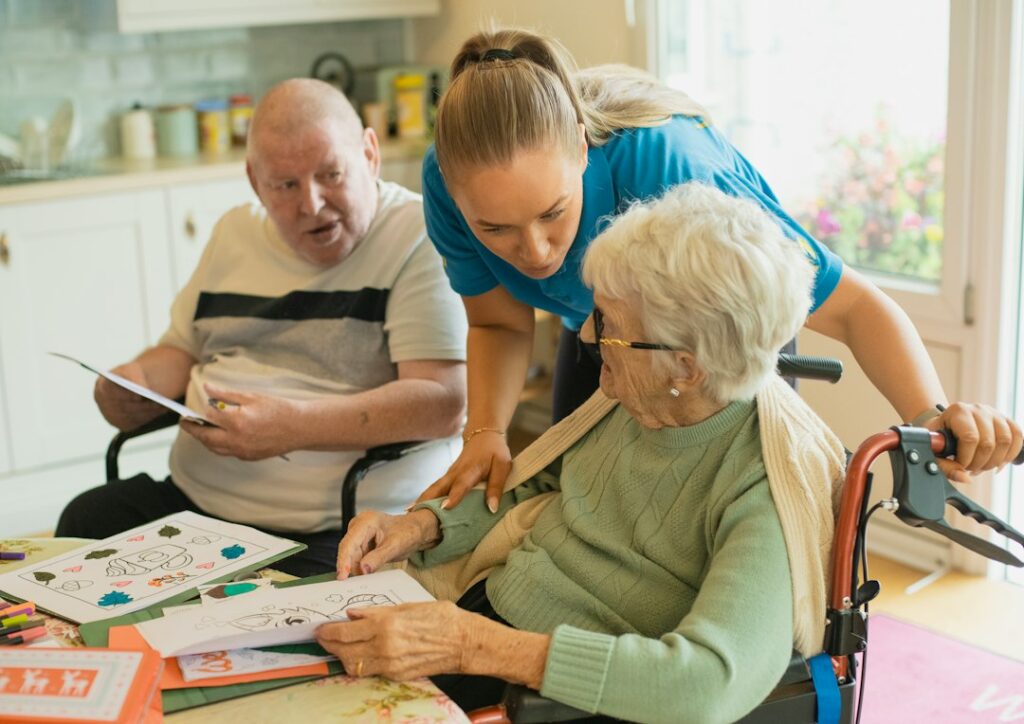
Dementia changes memory, communication, judgment, and the ability to manage everyday tasks. In assisted living, effective support focuses on safety, dignity, familiar routines, and meaningful connection rather than trying to correct every mistake.
For families in West Mifflin, understanding how dementia care works can make it easier to recognize helpful practices, communicate with staff, and respond calmly when a loved one’s needs change.
What does good dementia support look like?
Good support is individualized. Two people with the same diagnosis may have very different abilities, preferences, medical conditions, and sources of distress.
A supportive assisted living environment generally provides:
- Consistent daily routines
- Clear and simple communication
- Safe spaces for movement and activity
- Assistance with bathing, dressing, meals, and medications
- Opportunities for social connection
- Staff who know the resident’s history and preferences
- Regular communication with family members and health care professionals
The goal is not to take over every task. It is to provide the right amount of help while allowing the resident to remain as independent as possible.
How should staff communicate with a resident who has dementia?
Communication works best when it is calm, direct, and respectful. A person with dementia may need more time to understand a question or form a response.
Helpful approaches include:
- Use the person’s name and make eye contact.
- Approach from the front rather than from behind.
- Speak in short sentences and ask one question at a time.
- Offer two simple choices instead of an open-ended question.
- Allow extra time for an answer.
- Use gestures, pictures, or demonstrations when words are difficult.
- Avoid arguing about facts that the person remembers incorrectly.
- Acknowledge the emotion behind a statement, even when the details are inaccurate.
For example, if a resident says, “I need to go home because my mother is waiting,” correcting the statement may increase distress. A calmer response might be, “You are worried about her. Let’s sit together for a moment and have some tea.”
This approach does not mean agreeing with every belief. It means responding to the underlying fear, loneliness, or confusion.
How can routines reduce confusion?
A predictable routine can reduce anxiety because the resident knows what to expect. Activities such as waking, meals, bathing, exercise, rest, and bedtime are often easier when they occur at similar times each day.
Routines should still allow flexibility. A resident who is tired, ill, or upset may need a break rather than being pushed through the usual schedule.
Helpful routine supports may include:
- A large, easy-to-read clock and calendar
- Signs or pictures on bathroom and bedroom doors
- Clothing arranged in the order it should be put on
- Familiar music during personal care
- A quiet period before bedtime
- Regular access to a comfortable chair, walking path, or outdoor area
Seasonal changes also deserve attention. In a community with cold winters, icy walkways, shorter daylight hours, and heavier clothing can affect mobility and mood. Warm layers should be easy to manage, and outdoor activities should be adjusted for weather and fall risk.
What should families share with assisted living staff?
Families can improve care by providing practical information that may not appear in a medical record. Staff benefit from knowing the resident as a person, not only by diagnosis.
Useful details include:
- Preferred name and forms of address
- Previous work, hobbies, routines, and interests
- Foods the person enjoys or avoids
- Past experiences that may cause fear or embarrassment
- Typical sleep patterns
- Signs of pain, illness, or emotional distress
- Religious, cultural, or family traditions
- Strategies that have helped during difficult moments
- Important changes in behavior or functioning
A short written life history can be useful. It might include favorite songs, familiar topics, names of close relatives, and activities the person has always enjoyed.
Families should also share changes noticed during visits. Increased sleep, repeated falls, new difficulty eating, sudden confusion, or withdrawal may signal infection, medication effects, dehydration, pain, or another medical concern rather than simply “worsening dementia.”
How can assisted living support independence?
People with dementia often retain abilities longer when tasks are adapted instead of removed completely. Independence may mean choosing between two shirts, folding towels, watering plants, setting napkins, or walking a familiar route safely.
Helpful adaptations include:
- Breaking a task into small steps
- Demonstrating the first step
- Using clothing with simple fasteners
- Placing commonly used items where they can be seen
- Reducing background noise
- Providing stable seating and adequate lighting
- Using reminders without making the person feel tested

A task may take longer, but allowing extra time can preserve confidence. Taking over too quickly may lead to frustration, passivity, or loss of skills.
What causes agitation, wandering, or resistance to care?
Behavior changes are often attempts to communicate a need. Agitation may be related to pain, hunger, constipation, fatigue, fear, overstimulation, or difficulty understanding what is happening.
Resistance during bathing or dressing may reflect embarrassment, cold water, unfamiliar caregivers, or a preference for a different time of day. Wandering may indicate boredom, a search for a familiar person or place, restlessness, or a need for exercise.
Before assuming a behavior is intentional, staff and family members can consider:
- What happened immediately before it?
- Was the environment noisy, crowded, or unfamiliar?
- Could the resident be in pain or unwell?
- Is the person hungry, thirsty, tired, or too warm?
- Has there been a change in medication or routine?
- Does the behavior occur at a predictable time?
Prevention is usually more effective than confrontation. A quiet space, snack, short walk, familiar activity, or reassuring conversation may help. Sudden or severe changes should be reported for medical evaluation.
How can families make visits more comfortable?
Short, calm visits are often more successful than long visits that leave the resident exhausted. The best activity depends on the person’s abilities and interests.
Families might:
- Look through familiar photographs
- Listen to music
- Fold clothing or sort objects together
- Take a supervised walk
- Share a snack
- Read a short article or poem aloud
- Sit quietly without expecting conversation
Avoid quizzing the resident about dates, names, or recent events. Repeated questions can feel like a test. Conversation about familiar experiences, colors, music, food, or current surroundings may be easier.
If the resident does not recognize a family member, the visit can still provide comfort. Recognition may come through voice, touch, facial expression, or emotional familiarity even when the person’s name is not remembered.
When should care needs be reassessed?
Dementia care needs should be reviewed whenever there is a noticeable change in health, mobility, mood, communication, eating, sleep, or personal care.
A reassessment may be needed if the resident:
- Has repeated falls or near-falls
- Leaves safe areas or enters unsafe spaces
- Needs more help with toileting, dressing, or eating
- Shows new aggression, fear, or hallucinations
- Loses weight or frequently refuses food and fluids
- Sleeps much more or much less than usual
- Has difficulty swallowing
- Cannot safely manage current medications or mobility equipment
Families should ask how changes are being documented, what patterns staff have observed, and whether the care plan reflects the resident’s current needs. Significant changes may require medical review or a different level of support.
What rights and values should guide dementia care?
A dementia diagnosis does not remove a person’s right to privacy, respect, personal choice, and humane treatment. Care should protect the resident from avoidable harm while preserving dignity and participation.
That includes explaining care before providing it, covering the person during personal care, avoiding childish language, respecting reasonable preferences, and involving the resident in decisions whenever possible.
The most effective support combines safety with person-centered care. A familiar routine, a patient explanation, a favorite song, or a few extra minutes to complete a task can help a resident feel secure and understood.
