
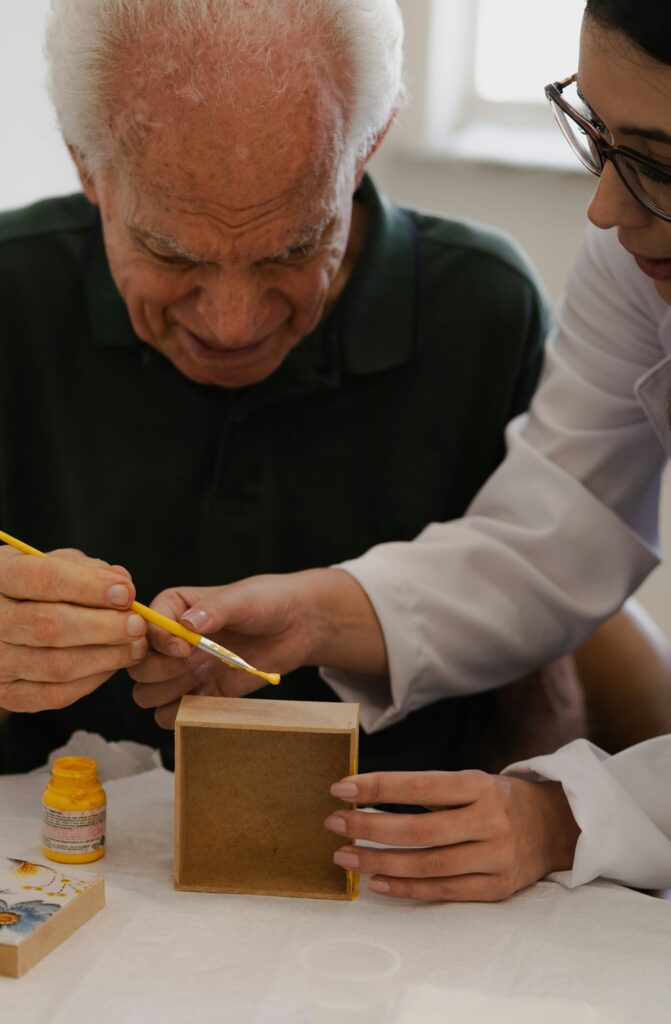
Why creative hobbies matter in assisted living
Creative hobbies give older adults meaningful ways to use their hands, express preferences, connect with others, and structure the day. In assisted living, an activity does not need to produce a polished result to be worthwhile. The process itself can support memory, mood, movement, communication, and a sense of personal identity.
For residents in West Mifflin, PA, indoor hobbies can be especially useful during cold weather, rainy periods, or days when travel and outdoor activities are less convenient. A well-chosen project can be adapted for different abilities, energy levels, vision changes, and mobility needs.
The most successful activities are enjoyable, flexible, and easy to pause. Residents should be able to participate without feeling rushed or judged.
What creative hobbies are suitable for older adults?
Suitable hobbies are those that match a person’s interests while reducing unnecessary physical or mental strain. Familiar activities are often a good starting point because they can bring back memories and encourage conversation.
Options may include:
- Watercolor painting or simple coloring
- Large-piece puzzles and collage projects
- Knitting, crocheting, or no-sew fabric crafts
- Scrapbooking and photo sorting
- Writing letters, memories, or short stories
- Flower arranging and indoor container gardening
- Music, singing, and rhythm activities
- Simple woodworking or decorative projects with supervision
- Clay modeling and textured crafts
- Seasonal decorations made from paper, fabric, or natural materials
A resident who once enjoyed sewing may prefer arranging fabric squares or choosing colors rather than managing a needle and thread. Someone who enjoyed gardening may enjoy planting herbs in small containers, misting indoor plants, or arranging cut flowers.
How can hobbies be adapted for vision, hearing, or mobility changes?
Creative activities can remain enjoyable when supplies and instructions are adjusted. The goal is to preserve choice and participation rather than expecting everyone to work in the same way.
For residents with limited vision, helpful changes may include:
- Using high-contrast materials
- Choosing larger print instructions
- Providing thick-handled brushes, pens, or tools
- Adding bright tape to the edges of tables or containers
- Using tactile materials such as yarn, felt, clay, or textured paper
For residents with hearing loss, face-to-face instruction, written steps, and visual demonstrations can make group activities easier to follow. Background music may need to be reduced so conversation and directions remain clear.
For residents with arthritis, tremors, or reduced hand strength, lightweight materials and larger handles can reduce discomfort. Spring-loaded scissors, adhesive-backed materials, paint markers, and pre-cut shapes may be easier to manage than small or delicate supplies.
A seated work area with good lighting, stable chairs, and enough room for mobility devices helps residents participate comfortably. Activities should be stopped if they cause pain, dizziness, unusual fatigue, or frustration.
Can creative hobbies help with memory?
Creative activities may support memory by connecting current experiences with familiar routines, music, images, and personal stories. They are not a cure for dementia or memory loss, but they can create opportunities for recognition, conversation, and emotional comfort.
Photo projects are especially useful because they can encourage residents to identify people, places, occupations, celebrations, or household traditions. A memory box might include copies of family photographs, fabric samples, postcards, recipe cards, or other safe objects connected to a person’s past.
Music can also prompt memories when conversation is difficult. Singing familiar songs, tapping along to a rhythm, or listening to music from an earlier period of life may support engagement without requiring a resident to remember specific facts.
It is usually better to ask open, gentle questions rather than correcting a resident’s recollection. Questions such as “What do you notice in this picture?” or “Does this remind you of anything?” allow the resident to participate without pressure.
Which hobbies work well for group activities?
Group hobbies are most effective when residents can participate at different levels. One person may lead a task, another may sort materials, and someone else may simply observe and talk.
Good group options include:
- Collaborative murals made from individual squares
- Seasonal wreaths or table decorations
- Group storytelling based on photographs
- Sing-alongs and simple percussion
- Shared gardening projects
- Recipe-card decorating and food-history discussions
- Community quilts assembled from prepared fabric pieces
- Art displays that reflect residents’ interests

Group activities should not depend entirely on speed, fine motor skill, or artistic ability. A resident can contribute by selecting colors, offering suggestions, holding materials, sharing a story, or encouraging another participant.
Small groups may be more comfortable for residents who become overwhelmed by noise or crowded rooms. Quiet activity tables can provide social connection without requiring constant conversation.
How can hobbies support emotional well-being?
Creative work can provide a sense of purpose, especially when daily routines feel repetitive. Completing a small project may give a resident something to anticipate, discuss, or share with family members.
Hobbies can also help express emotions that are difficult to explain verbally. Painting, music, writing, and tactile activities may offer a calming outlet during periods of sadness, restlessness, or loneliness. They should not replace medical or emotional support when a resident is experiencing persistent distress, but they can be part of a supportive daily routine.
The activity should be presented as an invitation rather than an obligation. Some residents may prefer to watch before participating. Others may enjoy short sessions of ten or fifteen minutes instead of a longer scheduled program.
Praise should focus on effort, choice, and personal meaning rather than artistic quality. Statements such as “You chose an interesting combination of colors” or “That story brings back a special memory” are often more helpful than judging whether a project looks perfect.
What should families bring for a personal hobby?
Families can support a resident’s interests by bringing a small number of familiar, manageable supplies. Too many items may create clutter or make it difficult to begin.
Useful materials might include:
- A labeled folder for drawings or writing
- Printed copies of family photographs
- Large-print books of patterns or song lyrics
- Washable markers and sturdy paper
- Soft yarn and simple craft tools
- A small container for safe gardening materials
- A notebook for memories, poems, or daily observations
- A portable music player with familiar recordings, if permitted
Before bringing supplies, families should check the residence’s safety rules and storage limitations. Sharp tools, hot equipment, strong adhesives, small loose parts, and materials that create allergies or choking risks may require restrictions or supervision.
Personal items should also be clearly labeled. This is particularly useful when several residents are participating in similar activities.
How can creative hobbies fit into daily life?
A hobby is more likely to continue when it is connected to a predictable routine. A resident might write after breakfast, work on a craft in the afternoon, or listen to music before bedtime. The schedule should remain flexible because energy, health, and attention can change from day to day.
Seasonal changes can provide natural inspiration without requiring residents to go outdoors. Indoor projects may reflect autumn colors, winter patterns, spring flowers, or summer memories. In West Mifflin, changing weather can make these indoor options useful throughout the year.
The best activity is not necessarily the most elaborate one. Sorting photographs, folding origami, arranging flowers, listening to a favorite album, or decorating a card can all be meaningful when the resident has genuine interest and control over the experience.
